
When families begin trying to help an older parent stay at home longer, they often start with care hours.
What many discover, however, is that small changes to the home environment can sometimes reduce risk before more care is added.
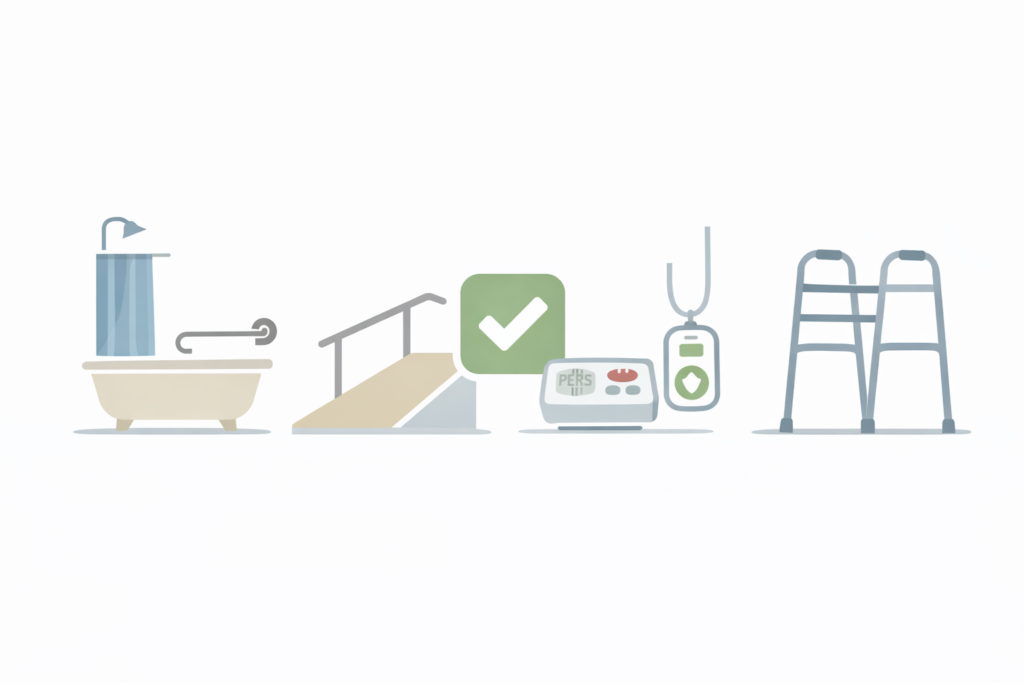
This article looks at the types of home safety equipment families commonly use to support aging in place, when these tools tend to help, and where their limits become clear.
Why Families Turn to Home Safety Equipment
Home safety equipment is rarely a first step.
Families usually begin considering these tools when:
- Mobility becomes less steady
- Daily tasks take more effort
- Falls or near-falls raise concern
- Caregivers feel increasing physical strain
In many cases, equipment is introduced to stabilize daily routines, not to replace care.
Areas of the Home Families Focus on First
Rather than addressing the entire home at once, families tend to focus on areas where risk appears earliest.
Bedroom Support
Bedrooms are often the first place where safety concerns emerge, especially at night.
Families commonly look for ways to:
- Make getting in and out of bed safer
- Reduce the risk of nighttime falls
- Support balance during transitions
Simple stability supports are often considered before increasing overnight supervision.
These tools can be helpful when mobility is limited but basic independence remains intact.
Bathroom Safety
Bathrooms consistently present one of the highest risk areas in the home.
Families frequently focus on:
- Preventing slips on wet surfaces
- Making transfers safer
- Reducing strain during bathing
Bathroom-related equipment is often added in response to a specific incident, such as a slip or near-fall, rather than proactively.
When used appropriately, these adjustments may reduce risk, but they do not eliminate the need for supervision if balance or cognition is significantly impaired.
Everyday Mobility Support
As movement becomes more tiring or unsteady, families often explore basic mobility aids.
These are usually introduced:
- To conserve energy
- To improve balance during short distances
- To reduce caregiver strain during transfers
Mobility aids are most effective when:
- The individual can use them consistently
- The home layout supports their use
- Caregivers receive guidance on safe assistance
Equipment alone cannot compensate for unsafe movement patterns or cognitive confusion.
What Home Safety Equipment Can Help With
When used in the right context, safety equipment may:
- Reduce fall risk in specific situations
- Make daily routines more manageable
- Decrease physical strain for caregivers
- Delay the need for additional care hours
These benefits are typically incremental, not transformative.
What Home Safety Equipment Cannot Do
It’s important to be clear about limitations.
Home safety equipment cannot:
- Replace ongoing supervision
- Address significant cognitive impairment
- Prevent all falls or injuries
- Substitute for hands-on assistance when needs escalate
Families often reach a turning point when equipment no longer meaningfully reduces risk, and care decisions must shift accordingly.
When Equipment Helps — and When It Signals a Transition
Introducing safety equipment can serve two different roles.
In some cases, it:
- Stabilizes a situation
- Buys time to reassess care needs
- Supports continued aging in place
In other cases, it highlights that:
- Care demands are increasing
- The home environment is becoming harder to manage safely
- More comprehensive support may soon be necessary
Recognizing which situation applies helps families plan rather than react.
A Practical Perspective
Home safety equipment is best viewed as part of a broader care strategy, not a solution on its own.
Families benefit most when they:
- Introduce equipment thoughtfully
- Monitor whether it’s actually reducing risk
- Reevaluate as needs change
Adding tools without reassessing care often delays — rather than improves — decision-making.
Next Steps
- Identify which daily activities feel least safe
- Consider whether equipment addresses the underlying risk
- Reassess care needs regularly rather than relying on one-time adjustments
How This Fits Into the Larger Care Picture
- What Is In-Home Care? explains the scope of home-based support
- In-Home Care Costs outlines financial realities as care expands
- Who Pays for In-Home Care explains funding limits
- In-Home Care vs Assisted Living compares long-term options
- Delaying Assisted Living shows how families try to extend aging in place
This article focuses on one of the most common steps families take in between.
Final Perspective
Home safety equipment can help families support independence longer — when expectations are realistic.
Used thoughtfully, these tools may reduce risk and caregiver strain.
Used in isolation, they can create a false sense of security.
The most important question is not which product to use, but whether current support still matches daily needs.